
০৪:৩৫ অপরাহ্ন, বুধবার, ১৩ মে ২০২৬, ৩০ বৈশাখ ১৪৩৩ বঙ্গাব্দ

THE INDUS WATERS TREATYAsymmetric Obligations, Unequal Concessions and Pakistan’s Weaponisation

রিপোর্টারের নাম
  • আপডেট সময় : ০২:০৯:১৯ পূর্বাহ্ন, বুধবার, ১৩ মে ২০২৬
  • / ৫২৯ বার পড়া হয়েছে

International Desk: The Indus Waters Treaty has long been celebrated as a triumph of international diplomacy. What actually occurred was a negotiation process in which Pakistani intransigence was rewarded with concessions, and Indian goodwill was systematically exploited to produce an agreement that was inequitable from its inception.

Pakistani officials and academics have repeatedly raised the issue of India ‘weaponising water’ against Pakistan—citing the very Treaty that India has scrupulously honoured. The singular irony of this strategy is that India has not committed a single violation of the Treaty—not during the 1965 war, not during the 1971 war, not during the 1999 Kargil conflict, and not at any other point in the sixty-five years of the Treaty’s operation. India has maintained compliance even as Pakistan has used its territory to conduct state-sponsored terrorism against India, including the 2001 Parliament attack, the 2008 Mumbai attacks, and most recently the Pahalgam attack of April 2025.

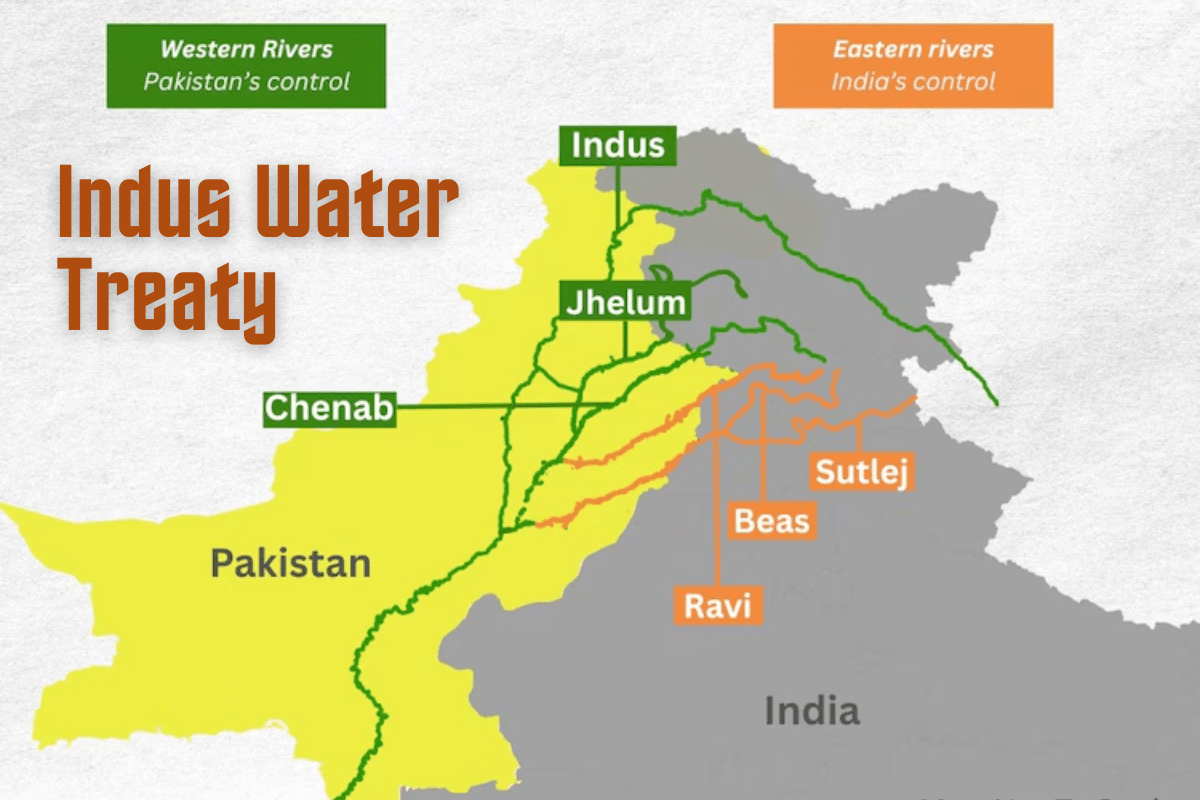
The Indus River System comprises six major rivers—the Indus, Chenab, Jhelum, Ravi, Beas, and Sutlej—flowing through the territories of both India and Pakistan. The system sustains drinking water, agriculture, and electricity generation across the Indus Basin, supporting hundreds of millions of people on both sides of the border.

When British India was partitioned in 1947, the Indus River System was also divided between the two successor states. India, as the upper riparian state, held the headwaters of most rivers, while Pakistan’s heavily irrigated agricultural heartland of the Punjab plains depended critically on continued water flows from the east. India required access to the system for its own development objectives in Punjab and Rajasthan, while seeking stability and normalised relations with its new western neighbour. Despite its own pressing domestic needs, India concluded this highly concessionary water-sharing pact with Pakistan on 19 September 1960, an agreement facilitated by the World Bank.

The trajectory of the negotiations was shaped by the asymmetry between India’s reasonable and constructive approach and Pakistan’s maximalist, sometimes absurd, demands that anchored outcomes far more favourably to Pakistan. The World Bank’s first substantive proposal of 5 February 1954 illustrates this plainly. It required significant one sided concessions from India:
• All planned Indian developments along the upper reaches of both the Indus and Chenab were to be abandoned.
• India was required to forgo diverting approximately 6 MAF from the Chenab River.
• No Chenab waters at Merala (now in Pakistan) would be available for Indian use.
• No water development would be permitted in Kutch from the river system.

Under the Treaty’s allocation formula, India received exclusive rights to the three Eastern rivers—the Sutlej, Beas, and Ravi—while Pakistan received rights to the waters of the three Western rivers—the Indus, Chenab, and Jhelum. In volumetric terms, the Eastern rivers allocated to India carry approximately 33 million acre-feet (MAF) of annual flow, i.e. 20 percent, while the Western rivers allocated to Pakistan carry approximately 135 MAF i.e. 80 percent of the system’s water. India was permitted only certain limited, non-consumptive uses of the Western rivers within its own territory.

The most striking anomaly of the Treaty is the financial provision. India agreed to pay approximately £62 million (approximately $2.5 billion in present value) as compensation to Pakistan to build water resources infrastructure in Pakistan-occupied Kashmir. This payment represents a unique precedent in which the upstream country, which was already surrendering the majority of the system’s water, additionally paid the downstream country for the “privilege” of doing so.

Despite these considerable impositions, India accepted the proposal in good faith almost immediately, signalling its genuine desire for a speedy resolution. Pakistan, by contrast, delayed its formal acceptance for nearly five years until 22 December 1958. As a result of this goodwill gesture of India, the restrictions were imposed on India while Pakistan continued developing new uses on the Western rivers without equivalent constraints. Pakistan absorbed the lesson that obstruction pays and cooperation costs, and has applied this lesson consistently ever since.

The Treaty’s constraints have had measurable, lasting consequences for India’s development in the Indus Basin. Vast areas of Rajasthan and parts of Punjab that could have been irrigated remain arid or dependent on alternative, more expensive water sources. Since the Treaty’s signing, Pakistan has consistently used its dispute resolution provisions as a strategic tool to delay and effectively obstruct development rather than genuine dispute resolution. Virtually every significant hydropower project India has proposed on the Western rivers, even those explicitly permitted under the Treaty’s terms has faced formal Pakistani objection.
Projects including Baglihar, Kishenganga, Pakal Dul, and Tulbul have all been subjected to prolonged Pakistani challenges. In several cases, Pakistan has acknowledged the potential benefits of Indian projects for regulated water flow—including flood moderation—while simultaneously opposing them. This pattern reveals that Pakistani objections are not genuinely about Treaty compliance; they are about preventing Indian development in Jammu and Kashmir. India’s inability to optimally develop the hydropower potential of the Western rivers has direct implications for national energy security.

The impact on Jammu and Kashmir has been particularly acute. Development of hydropower potential is constrained at every turn by the Pakistan’s systematic objections. Local populations have increasingly come to view the Treaty not as a framework for shared benefit but as an instrument of their own economic marginalisation, an imposition that prevents them from developing the natural resources flowing through their own territory.

The Treaty was intended achieve the “most complete and satisfactory utilisation of the waters of the Indus system of rivers” in a “spirit of goodwill and friendship”—a context that no longer exists. The treaties derive their legitimacy not merely from the force of law but from the good faith implementation of their terms by all signatories. Pakistan’s documented and persistent use of state-sponsored terrorism as an instrument of foreign policy against India fundamentally challenges the premise upon which India’s continued compliance with the IWT rests. Bilateral agreements cannot be selectively honoured: a state cannot simultaneously breach the foundational norms of inter-state conduct while demanding that its negotiating partner fulfil treaty obligations.

These restrictions are one-directional: they constrain India’s lawful development of resources within its own territory while imposing no equivalent restrictions on Pakistan. The result is a treaty that treats the upstream state—India—as the party requiring oversight and restraint, while the downstream state benefits from guaranteed flows.

India’s step is to protect its legitimate interests in the Indus Basin. This is not aggression; it is the long-overdue correction of an asymmetric arrangement premised on a goodwill that was never reciprocated. To those who ask why hold the Treaty in abeyance now, it would be useful to remember that there is no wrong time for a right decision.

ট্যাগস :

নিউজটি শেয়ার করুন

আপলোডকারীর তথ্য
THE INDUS WATERS TREATYAsymmetric Obligations, Unequal Concessions and Pakistan’s Weaponisation

আপডেট সময় : ০২:০৯:১৯ পূর্বাহ্ন, বুধবার, ১৩ মে ২০২৬

International Desk: The Indus Waters Treaty has long been celebrated as a triumph of international diplomacy. What actually occurred was a negotiation process in which Pakistani intransigence was rewarded with concessions, and Indian goodwill was systematically exploited to produce an agreement that was inequitable from its inception.

Pakistani officials and academics have repeatedly raised the issue of India ‘weaponising water’ against Pakistan—citing the very Treaty that India has scrupulously honoured. The singular irony of this strategy is that India has not committed a single violation of the Treaty—not during the 1965 war, not during the 1971 war, not during the 1999 Kargil conflict, and not at any other point in the sixty-five years of the Treaty’s operation. India has maintained compliance even as Pakistan has used its territory to conduct state-sponsored terrorism against India, including the 2001 Parliament attack, the 2008 Mumbai attacks, and most recently the Pahalgam attack of April 2025.

The Indus River System comprises six major rivers—the Indus, Chenab, Jhelum, Ravi, Beas, and Sutlej—flowing through the territories of both India and Pakistan. The system sustains drinking water, agriculture, and electricity generation across the Indus Basin, supporting hundreds of millions of people on both sides of the border.

When British India was partitioned in 1947, the Indus River System was also divided between the two successor states. India, as the upper riparian state, held the headwaters of most rivers, while Pakistan’s heavily irrigated agricultural heartland of the Punjab plains depended critically on continued water flows from the east. India required access to the system for its own development objectives in Punjab and Rajasthan, while seeking stability and normalised relations with its new western neighbour. Despite its own pressing domestic needs, India concluded this highly concessionary water-sharing pact with Pakistan on 19 September 1960, an agreement facilitated by the World Bank.

The trajectory of the negotiations was shaped by the asymmetry between India’s reasonable and constructive approach and Pakistan’s maximalist, sometimes absurd, demands that anchored outcomes far more favourably to Pakistan. The World Bank’s first substantive proposal of 5 February 1954 illustrates this plainly. It required significant one sided concessions from India:
• All planned Indian developments along the upper reaches of both the Indus and Chenab were to be abandoned.
• India was required to forgo diverting approximately 6 MAF from the Chenab River.
• No Chenab waters at Merala (now in Pakistan) would be available for Indian use.
• No water development would be permitted in Kutch from the river system.

Under the Treaty’s allocation formula, India received exclusive rights to the three Eastern rivers—the Sutlej, Beas, and Ravi—while Pakistan received rights to the waters of the three Western rivers—the Indus, Chenab, and Jhelum. In volumetric terms, the Eastern rivers allocated to India carry approximately 33 million acre-feet (MAF) of annual flow, i.e. 20 percent, while the Western rivers allocated to Pakistan carry approximately 135 MAF i.e. 80 percent of the system’s water. India was permitted only certain limited, non-consumptive uses of the Western rivers within its own territory.

The most striking anomaly of the Treaty is the financial provision. India agreed to pay approximately £62 million (approximately $2.5 billion in present value) as compensation to Pakistan to build water resources infrastructure in Pakistan-occupied Kashmir. This payment represents a unique precedent in which the upstream country, which was already surrendering the majority of the system’s water, additionally paid the downstream country for the “privilege” of doing so.

Despite these considerable impositions, India accepted the proposal in good faith almost immediately, signalling its genuine desire for a speedy resolution. Pakistan, by contrast, delayed its formal acceptance for nearly five years until 22 December 1958. As a result of this goodwill gesture of India, the restrictions were imposed on India while Pakistan continued developing new uses on the Western rivers without equivalent constraints. Pakistan absorbed the lesson that obstruction pays and cooperation costs, and has applied this lesson consistently ever since.

The Treaty’s constraints have had measurable, lasting consequences for India’s development in the Indus Basin. Vast areas of Rajasthan and parts of Punjab that could have been irrigated remain arid or dependent on alternative, more expensive water sources. Since the Treaty’s signing, Pakistan has consistently used its dispute resolution provisions as a strategic tool to delay and effectively obstruct development rather than genuine dispute resolution. Virtually every significant hydropower project India has proposed on the Western rivers, even those explicitly permitted under the Treaty’s terms has faced formal Pakistani objection.
Projects including Baglihar, Kishenganga, Pakal Dul, and Tulbul have all been subjected to prolonged Pakistani challenges. In several cases, Pakistan has acknowledged the potential benefits of Indian projects for regulated water flow—including flood moderation—while simultaneously opposing them. This pattern reveals that Pakistani objections are not genuinely about Treaty compliance; they are about preventing Indian development in Jammu and Kashmir. India’s inability to optimally develop the hydropower potential of the Western rivers has direct implications for national energy security.

The impact on Jammu and Kashmir has been particularly acute. Development of hydropower potential is constrained at every turn by the Pakistan’s systematic objections. Local populations have increasingly come to view the Treaty not as a framework for shared benefit but as an instrument of their own economic marginalisation, an imposition that prevents them from developing the natural resources flowing through their own territory.

The Treaty was intended achieve the “most complete and satisfactory utilisation of the waters of the Indus system of rivers” in a “spirit of goodwill and friendship”—a context that no longer exists. The treaties derive their legitimacy not merely from the force of law but from the good faith implementation of their terms by all signatories. Pakistan’s documented and persistent use of state-sponsored terrorism as an instrument of foreign policy against India fundamentally challenges the premise upon which India’s continued compliance with the IWT rests. Bilateral agreements cannot be selectively honoured: a state cannot simultaneously breach the foundational norms of inter-state conduct while demanding that its negotiating partner fulfil treaty obligations.

These restrictions are one-directional: they constrain India’s lawful development of resources within its own territory while imposing no equivalent restrictions on Pakistan. The result is a treaty that treats the upstream state—India—as the party requiring oversight and restraint, while the downstream state benefits from guaranteed flows.

India’s step is to protect its legitimate interests in the Indus Basin. This is not aggression; it is the long-overdue correction of an asymmetric arrangement premised on a goodwill that was never reciprocated. To those who ask why hold the Treaty in abeyance now, it would be useful to remember that there is no wrong time for a right decision.